
This piece explores ESG and sustainability challenges, highlighting organisations’ need to balance regulatory demands with long-term value creation. By Michael Willis, Management Practice Associate Professor at Cambridge Judge Business School, Academic Programme Director of the ESG & Sustainability Strategy for Financial Leaders & Practitioners Programme.
Imagine settling in your seat for a long-haul flight. Maybe even in business class, if you’re lucky. Shortly after departure, you feel the aircraft shake and shudder, and hear the pilot order everyone back to their seats. It’s turbulence: unpredictable, uncomfortable, unpleasant. If it gets too severe, pilots may need to reroute their flights to avoid it.
If you’ve been designing or implementing your organisation’s sustainability strategy, a complex task in the most tranquil of times, you may have been feeling some particularly intense turbulence lately.
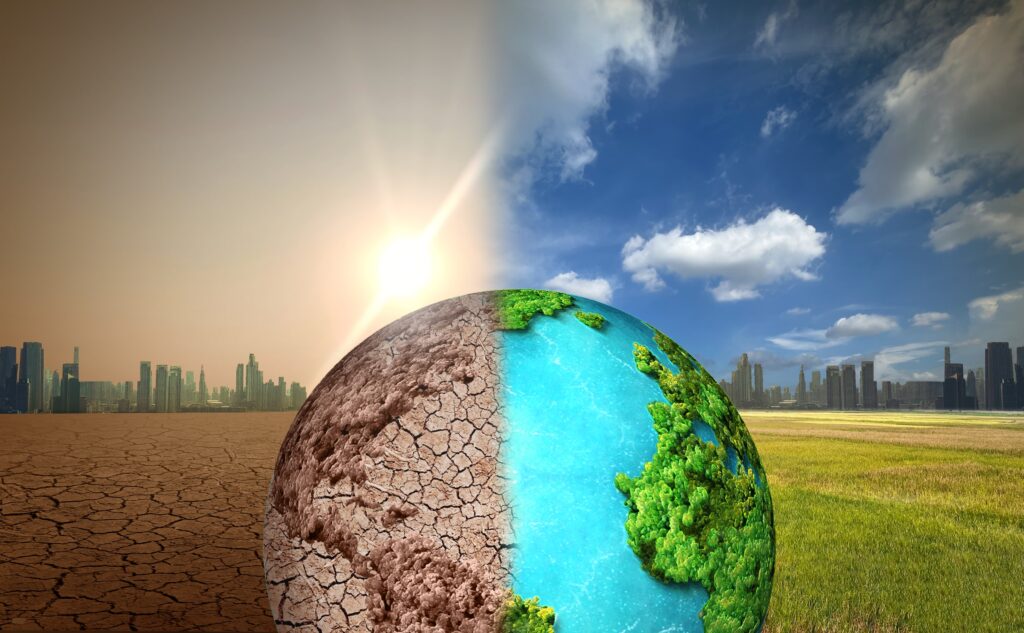
While a globally coordinated transition to renewable energy remains elusive, physical impacts of climate change continue to manifest. According to the Copernicus Institute, 2024 was the first year to exceed 1.5°C above the pre-industrial temperature level.[1]
The physical risks of climate change are likely to increase with global emissions and energy consumption. Access to electricity is critical for eliminating poverty and improving living conditions around the world. The good news is that the share of the world’s population without access to electricity has been decreasing, to below 10% by some estimates.[2] Demand is projected to continue to increase steadily through most forecast horizons, driven by growth in population, GDP and manufacturing in non-OECD countries.[3] To meet this demand sustainably, we need energy systems that are “safe, low-carbon, and cheap”.[4] These are not yet present at scale in areas where demand is projected to increase most.
On the political front, the EU set out on an ambitious, world-leading path with the Green Deal and its components, including initiatives like the EU Taxonomy, the Corporate Sustainability Reporting Directive (CSRD), the Corporate Sustainability Due Diligence Directive (CSDDD) and the Carbon Border Adjustment Mechanism (CBAM). The recent “omnibus” proposal, however, is poised to roll back, scale down, and delay key components of these initiatives.[5]
The new regime in the US seems hostile to all things ESG (yes, even the G[6]). Some states, however, are staying the course with their own regulatory agendas, enacting rules with extra-territorial implications for global companies doing business there.[7]
Amidst all the change and uncertainty, adjustments to risk management and strategy will vary by country, sector and organisation. Your organisation may be due for, or in the midst of, a significant reassessment of its sustainability strategy. Or perhaps it’s staying the course with some minor tweaks. Regardless of whether you’re powering through the turbulence or re-routing the aircraft, taking stock of the latest global developments and assessing (or re-assessing) sustainability risks and opportunities will help you develop and refine value-creating strategies.
This piece is by Michael Willis, Management Practice Associate Professor at Cambridge Judge Business School, Academic Programme Director of the The ESG & Sustainability Strategy for Financial Leaders & Practitioners Programme
Michael Willis is the Academic Programme Director for our ESG & Sustainability Strategy for Financial Leaders & Practitioners Programme, a collaborative programme between Cambridge Judge Executive Education and the Institute of Chartered Accountants in England and Wales (ICAEW).
The 4-day ESG and Sustainability Strategy for Finance Leaders and Practitioners Programme is a face-face-programme which will equip participants with the knowledge and tools to integrate sustainability into their organisations’ strategies and operations. It will cover climate and sustainability; the information ecosystem; sustainable finance and leadership from 22-25 April 2025.
Join us in April. Book your place today > https://execedinfo.jbs.cam.ac.uk/esg-sustainability-strategy
[1] https://climate.copernicus.eu/copernicus-2024-first-year-exceed-15degc-above-pre-industrial-level
[2] https://ourworldindata.org/energy-access
[3] https://www.eia.gov/outlooks/ieo/consumption/sub-topic-03.php
[4] https://ourworldindata.org/energy
[5] https://ec.europa.eu/commission/presscorner/detail/en/qanda_25_615
[6] See, for example, https://www.whitehouse.gov/presidential-actions/2025/02/pausing-foreign-corrupt-practices-act-enforcement-to-further-american-economic-and-national-security/, and https://www.businesslawprofessors.com/2025/02/delaware-decides-delaware-law-has-no-value/
[7] See, for example, https://corpgov.law.harvard.edu/2024/12/04/california-climate-disclosure-laws-recent-developments/, https://www.nysenate.gov/legislation/bills/2025/S3456, and https://leg.colorado.gov/bills/hb25-1119